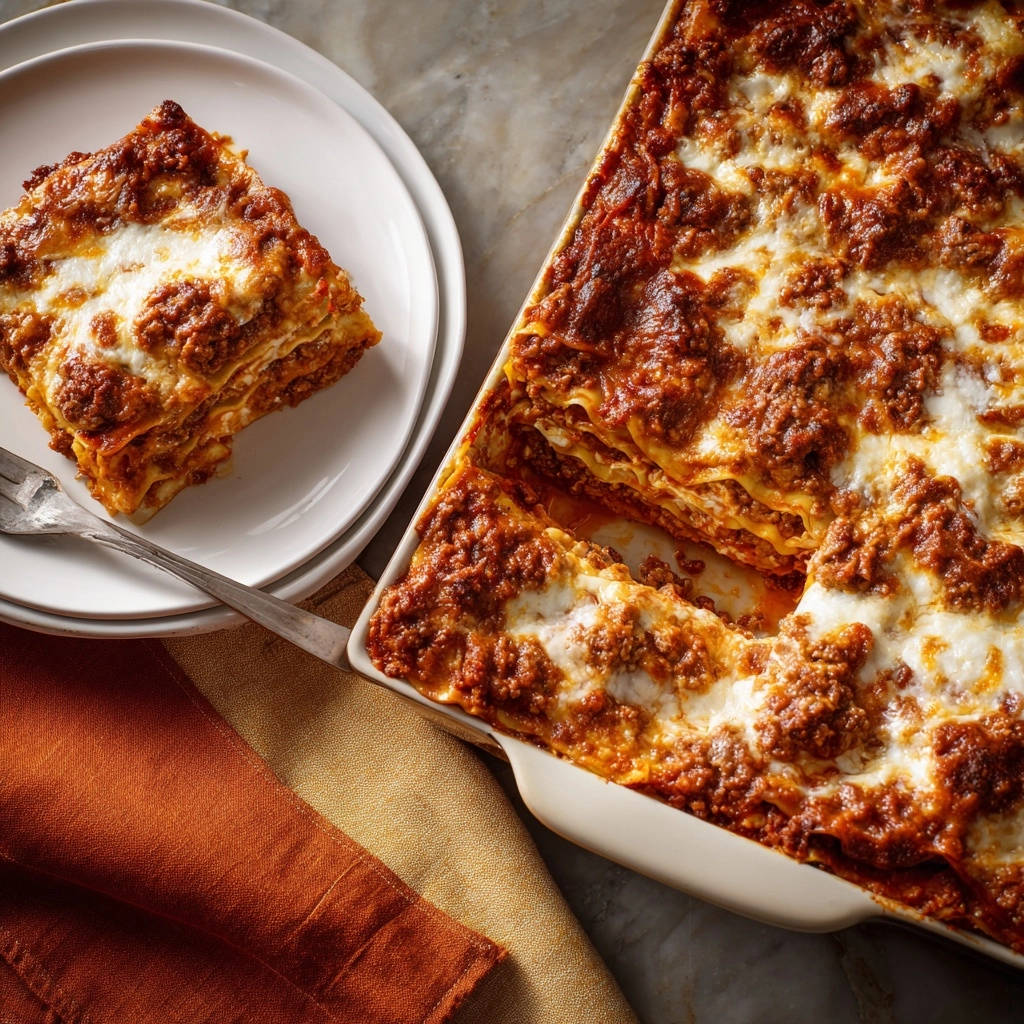
Classic Beef Lasagna: The Secret to Perfect Slices
Ever sliced into a beautiful lasagna, only to watch it collapse into a saucy, unruly mound on the plate? It’s a common kitchen heartache! That’s precisely why I’m sharing my expert recipe for a Classic Beef Lasagna that guarantees perfectly structured, sliceable layers every single time. This rendition elevates a beloved comfort food, ensuring it tastes incredible and holds its impressive shape.
Why This Classic Beef Lasagna Stands Above the Rest
The “Never Falls Apart” Guarantee: Our Secret Revealed
This Classic Beef Lasagna recipe solves the universal frustration of a collapsing dish. The secret lies in a crucial, often-skipped resting period after baking. This simple technique allows the layers to firm up beautifully, ensuring clean, impressive slices every time you serve.
Rich, Deep Flavor: The Art of a Slow-Simmered Sauce
The heart of any great lasagna is its meat sauce. Our recipe emphasizes a slow, gentle simmer for at least 30 minutes, allowing the flavors to meld and deepen. This critical step prevents a watery lasagna, contributing to both its taste and structural integrity.
Get Our Best Recipes Weekly!
Join thousands of food lovers and get delicious recipes delivered to your inbox.
For more hearty beef macaroni that’s never watery, try this method.
A Beloved Classic: The Comfort of Familiar, Elevated Flavors
There’s a reason Classic Beef Lasagna remains a family favorite worldwide. This recipe honors those traditional, comforting tastes, from the savory beef and rich tomatoes to the creamy cheese layers. It’s the ultimate crowd-pleaser, delivering nostalgic flavors with a refined touch.
The Essential Ingredients for Your Lasagna Masterpiece
Building Blocks: The Savory Meat Sauce Base
Lean ground beef forms the robust foundation, providing rich, savory flavor without excessive grease. Finely chopped onion and minced garlic are sautéed to create an aromatic and sweet base layer.
Crushed tomatoes bring the necessary acidity and body, while a touch of water helps achieve the perfect simmering consistency. Olive oil is used for sautéing, and a generous amount of Italian seasoning, along with salt and pepper, infuses the sauce with classic Mediterranean notes.
Creamy Indulgence: Crafting the Ricotta Blend
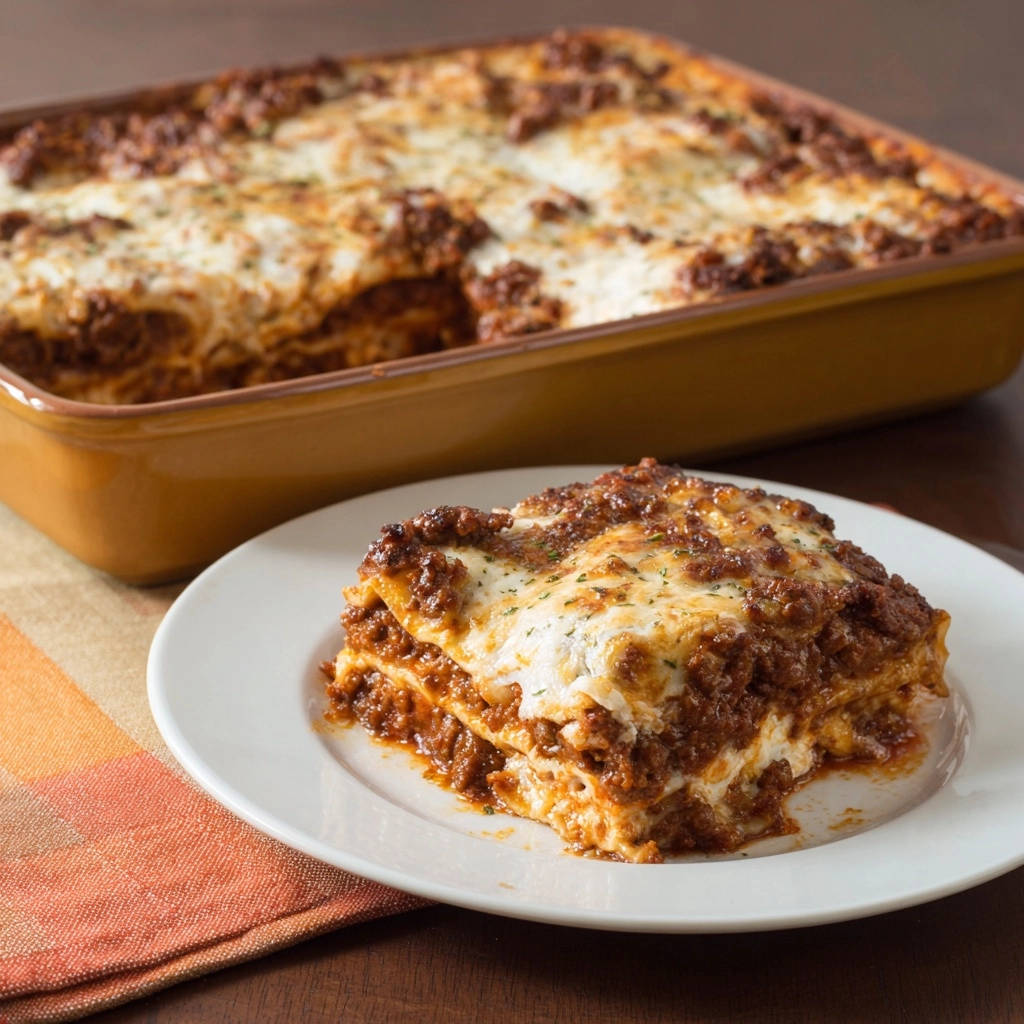
Fresh ricotta cheese is the star here, providing a creamy, tangy contrast to the rich meat sauce. A large egg is crucial; it acts as a binder, helping the cheese mixture set firmly when baked, contributing significantly to the lasagna’s structure.
A blend of shredded mozzarella and grated Parmesan cheese adds melty texture and sharp, salty undertones. Opt for good quality cheeses and grate them yourself for the smoothest melt and best flavor if possible.
The Foundation: Choosing Your Lasagna Noodles
You have a choice for the foundation of your Classic Beef Lasagna: oven-ready lasagna noodles offer convenience, eliminating the pre-boiling step. If using traditional noodles, cook them gently to al dente according to package directions. They will finish cooking perfectly in the oven, ensuring a tender bite without becoming mushy.
Gear Up: Essential Tools for Lasagna Success
The Right Baking Dish Matters
A 9×13 inch baking dish is the optimal size for this Classic Beef Lasagna recipe. It ensures the correct number of layers, allows for even cooking, and provides ample space for the ingredients to meld beautifully without overflowing.
Cooking Essentials for Sauce & Cheese
You’ll need a large pot or Dutch oven for simmering the meat sauce, ensuring all ingredients fit comfortably and cook evenly. Several medium bowls are essential for preparing the ricotta mixture and holding the various cheeses.
A sturdy spoon or spatula is vital for browning the beef and stirring the sauce. A whisk helps to combine the ricotta, egg, and seasonings smoothly for a uniform cheese layer.
Step-by-Step Perfection: Crafting Your Classic Beef Lasagna
- Start Your Sauce Base:
Heat olive oil in a large pot or Dutch oven over medium heat. Add finely chopped onion and cook until softened, about 5-7 minutes, ensuring a sweet base. Stir in minced garlic and cook for just another minute until fragrant, being careful not to burn it.
- Brown the Beef to Perfection:
Add the lean ground beef to the pot, breaking it up with a spoon. Cook until it’s fully browned, then drain any excess grease thoroughly. This step is crucial for a rich, non-greasy sauce.
For perfectly formed meatballs, check out this creamy gnocchi & meatball skillet.
- Simmer for Deep Flavor:
Stir in the crushed tomatoes, water, Italian seasoning, 1 teaspoon salt, and 1/2 teaspoon black pepper. Bring the mixture to a gentle simmer, then reduce the heat to low. Cover the pot and let it simmer for at least 30 minutes, or up to an hour, stirring occasionally. This extended simmer allows the flavors to meld beautifully and the sauce to thicken slightly, preventing a watery lasagna.
- Prepare the Creamy Cheese Mixture:
In a medium bowl, combine ricotta cheese, the large egg, 1 cup shredded mozzarella, and 1/4 cup grated Parmesan cheese. Season with a pinch of salt and pepper. The egg acts as a vital binder, helping the cheese layer set firmly and contributes to the lasagna’s structural integrity.
- Master the Art of Layering:
Preheat your oven to 375F (190C). Spread a thin layer of meat sauce on the bottom of a 9×13 inch baking dish; this prevents sticking and provides a flavorful base. Arrange three lasagna noodles over the sauce. Evenly spread half of the ricotta mixture over the noodles. Top with about 1.5 cups of meat sauce, then sprinkle with 1/4 cup shredded mozzarella. Repeat this layering: another layer of noodles, the remaining ricotta mixture, 1.5 cups of meat sauce, and 1/4 cup shredded mozzarella. Finish with a final layer of noodles, the remaining meat sauce, and the remaining 1/2 cup shredded mozzarella and 1/4 cup grated Parmesan.
- Bake to Golden Perfection:
Cover the baking dish tightly with aluminum foil (for easy removal, you can spray the underside of the foil with cooking spray to prevent sticking to the cheese). Bake for 25 minutes. Remove the foil and continue baking for another 20-25 minutes, or until the top is beautifully bubbly and golden brown.
- THE CRUCIAL RESTING STEP (Don’t Skip This!):
This is the game-changer for lasagna that holds its shape! Once baked, remove the lasagna from the oven and let it REST UNDISTURBED on a wire rack for a minimum of 15-20 minutes – even better, aim for 30 minutes. During this crucial resting period, the cheese and sauce have time to cool slightly and set, allowing the layers to firm up and preventing that dreaded structural collapse when you slice into it. Patience truly is key here for perfectly clean, intact slices.
- Slice and Savor:
After the essential resting period, slice into generous portions and serve your perfectly layered, never-falling-apart Classic Beef Lasagna. Prepare for rave reviews!
Beyond the Recipe: Expert Tips for Lasagna Brilliance
Mastering the Sauce: Flavor Depth and Consistency
Longer Simmer, Deeper Flavor: For an even richer sauce, let it simmer for 1.5 to 2 hours. This concentrates flavors and further thickens the sauce, making it less prone to running.
A Touch of Sweetness: Add a pinch of sugar or a grated carrot to the sauce to balance the acidity of the tomatoes.
Spice it Up: A pinch of red pepper flakes adds a subtle warmth to the meat sauce, enhancing its complexity.
Cheese Layer Secrets: Achieving Creamy Perfection
Draining Ricotta: If your ricotta seems particularly wet, drain it in a fine-mesh sieve for 15-20 minutes before mixing to prevent a watery cheese layer.
Freshly Grated Cheese: While pre-shredded works, freshly grated mozzarella and Parmesan melt more smoothly and offer superior flavor.
Noodle Nuances: Optimizing Your Foundation
Salt the Water (for traditional noodles): If boiling traditional noodles, ensure the water is generously salted. This seasons the noodles from within and prevents sticking.
Don’t Overcook: If using traditional noodles, cook them to just al dente. They will finish cooking in the oven, and overcooked noodles can become mushy.
The Art of Resting: Why Patience is a Virtue
Embrace the Wait: Seriously, resist the urge to cut into it early. The longer it rests, the cleaner your slices will be, and the more structurally sound your Classic Beef Lasagna will become.
Tent with Foil: If you’re concerned about it cooling too much during a longer rest, you can loosely tent it with foil after removing it from the oven.
Common Lasagna Hurdles & How to Conquer Them
“My Lasagna is Watery!”
Ensure your meat sauce simmers long enough to thicken, and always drain excess grease from the browned beef. Additionally, if your ricotta cheese is very wet, draining it in a fine-mesh sieve for 15-20 minutes before mixing can significantly reduce excess moisture in your lasagna.
“My Lasagna Fell Apart When I Sliced It!”
The number one culprit here is not allowing enough resting time after baking. The crucial 15-30 minute rest allows the cheese and sauce to set, preventing the layers from collapsing. Also, ensure the egg is properly incorporated into the ricotta mixture, as it acts as a binder.
“The Top is Burning, But the Middle Isn’t Cooked!”
If you notice the top browning too quickly, cover your lasagna with aluminum foil for the majority of the baking time, only removing it for the last 15-20 minutes. You can also lower your oven temperature slightly if this is a recurring issue with your oven’s calibration.
“The Cheese Layer is Dry/Crumbly!”
Using freshly grated, good quality mozzarella melts more smoothly than pre-shredded, which often contains anti-caking agents. Also, ensure the lasagna is covered tightly with foil during the initial bake to trap steam and keep the cheese moist.
Make It Your Own: Delicious Variations and Dietary Swaps
Vegetarian or Gluten-Free Options
For a vegetarian version, swap the ground beef for plant-based mince, lentils, or a mixture of finely diced mushrooms and zucchini. For gluten-free, simply use certified gluten-free lasagna noodles.
Spice It Up: Adding a Kick to Your Sauce
Introduce a vibrant kick by adding 1/2 teaspoon of red pepper flakes to your meat sauce. For an herbaceous twist, consider fresh basil or oregano stirred in during the final minutes of simmering.
Beyond Beef: Exploring Other Meat Fillings
While classic, beef isn’t your only option! Try ground Italian sausage (mild or spicy), ground turkey, or a combination of beef and ground chicken for different flavor profiles and textures.
Enjoying Your Lasagna: Serving, Storing, and Planning Ahead
Perfect Pairings: What to Serve with Classic Beef Lasagna
Classic Beef Lasagna pairs beautifully with a simple green salad with a vinaigrette dressing to cut through the richness. Warm, crusty garlic bread is also an essential accompaniment for soaking up any extra sauce.
Round Out Your Meal
Serving this classic beef lasagna? Consider these dishes to complete your Italian-inspired spread.
- For a warming start, try the Classic Meatball & Tomato Soup, offering tender bites that complement the richness of the lasagna.
- If you’re looking for another beef-centric dish, the Hearty Beef & Veggie Braise provides a different but equally satisfying experience with its tender meat.
Storing Leftovers: Keeping It Fresh
Allow any leftover lasagna to cool completely, then cover it tightly with plastic wrap or aluminum foil, or transfer to an airtight container. It will keep well in the refrigerator for 3-4 days.
To reheat, cover individual portions and microwave until heated through, or reheat larger sections in an oven preheated to 350F (175C) until bubbly, covering loosely with foil if needed to prevent drying.
Make-Ahead Magic: Prep Today, Bake Tomorrow
You can assemble the entire lasagna a day in advance! Cover it tightly with plastic wrap and refrigerate. When ready to bake, let it sit at room temperature for 30 minutes before baking as directed, adding an extra 10-15 minutes to the covered baking time.
Freezing for Future Feasts
For future convenience, unbaked lasagna can be frozen, tightly wrapped, for up to 3 months. Thaw overnight in the refrigerator before baking. Baked and cooled lasagna can also be frozen in individual portions for easy reheating.
Your Classic Beef Lasagna Questions, Answered
Can I use no-boil noodles for this recipe?
Yes, you can absolutely use no-boil (oven-ready) noodles for this Classic Beef Lasagna recipe. The liquid in our sauce is sufficient for them to cook through. Simply follow the package directions and ensure there’s enough sauce surrounding them.
How do I know when my lasagna is fully cooked?
Your lasagna is fully cooked when the top is bubbly and golden brown, and the internal temperature reaches 160-165°F (71-74°C) when checked with a meat thermometer inserted into the center. The noodles should be tender when pierced with a knife.
What’s the best way to reheat lasagna?
For best results, reheat individual slices in the microwave at 50% power for 2-3 minutes, or until hot. For a crispier crust, reheat a larger portion in an oven preheated to 350°F (175°C), covered with foil, for about 20-30 minutes, removing the foil for the last few minutes.
Can I make this recipe in a different sized dish?
While a 9×13 inch dish is ideal, you can use two smaller 8×8 inch dishes, or adjust layering for a deeper, smaller dish. Be mindful that different dish sizes may require slight adjustments to baking time, so monitor closely.
Your Lasagna Journey Starts Now: A Culinary Triumph Awaits!
You’re now equipped with all the knowledge and secret tips to create a truly unforgettable Classic Beef Lasagna. Gone are the days of sad, collapsed layers; get ready to impress your family and friends with a perfectly structured, deeply flavorful masterpiece.
Don’t just make dinner-create an experience! We encourage you to try this recipe, embrace the resting period, and savor every perfectly sliced bite. Share your culinary triumph in the comments below, and let us know how your never-falls-apart Classic Beef Lasagna turned out!
Classic Beef Lasagna

- 1 pound lean ground beef
- 1 large onion, finely chopped
- 3 cloves garlic, minced
- 28 ounces crushed tomatoes
- 1/2 cup water
- 2 tablespoons olive oil
- 1 tablespoon Italian seasoning
- 1 teaspoon salt, plus more to taste
- 1/2 teaspoon black pepper, plus more to taste
- 9 lasagna noodles (oven-ready or cooked al dente according to package directions)
- 15 ounces ricotta cheese
- 1 large egg
- 2 cups shredded mozzarella cheese, divided
- 1/2 cup grated Parmesan cheese, divided
- Start your sauce: Heat olive oil in a large pot or Dutch oven over medium heat. Add chopped onion and cook until softened, about 5-7 minutes. Add minced garlic and cook for another minute until fragrant.
- Brown the beef: Add ground beef to the pot. Break it up with a spoon and cook until fully browned, draining any excess grease.
- Simmer for flavor: Stir in crushed tomatoes, water, Italian seasoning, 1 teaspoon salt, and 1/2 teaspoon black pepper. Bring to a simmer, then reduce heat to low, cover, and let it gently simmer for at least 30 minutes, or up to an hour, stirring occasionally. This develops deep flavor and slightly thickens the sauce, preventing a watery lasagna.
- Prepare cheese mixture: In a medium bowl, combine ricotta cheese, egg, 1 cup shredded mozzarella, and 1/4 cup grated Parmesan cheese. Season with a pinch of salt and pepper. The egg acts as a binder, helping the cheese layer set firmly.
- Layer it up: Preheat oven to 375F (190C). Spread a thin layer of meat sauce on the bottom of a 9×13 inch baking dish. Arrange three lasagna noodles over the sauce. Spread half of the ricotta mixture evenly over the noodles. Top with about 1.5 cups of meat sauce, then sprinkle with 1/4 cup shredded mozzarella. Repeat with another layer of noodles, the remaining ricotta mixture, 1.5 cups of meat sauce, and 1/4 cup shredded mozzarella. Finish with a final layer of noodles, the remaining meat sauce, and the remaining 1/2 cup shredded mozzarella and 1/4 cup grated Parmesan.
- Bake to perfection: Cover the baking dish tightly with aluminum foil (you can spray the underside of the foil with cooking spray to prevent sticking to the cheese). Bake for 25 minutes. Remove foil and bake for another 20-25 minutes, or until the top is bubbly and golden brown.
- THE CRUCIAL STEP (Don’t skip this!): This is the game-changer for lasagna that holds its shape! Once baked, remove the lasagna from the oven and let it REST UNDISTURBED on a wire rack for a minimum of 15-20 minutes, or even better, 30 minutes. During this crucial resting period, the cheese and sauce have time to cool slightly and set, allowing the layers to firm up and preventing that dreaded structural collapse when you slice into it. Patience is key here for perfectly clean slices.
- Serve and enjoy: Slice into generous portions and serve your perfectly layered, never-falling-apart lasagna!
Resting the lasagna for 15-30 minutes after baking is crucial for layers to set, preventing collapse and ensuring perfect slices.