Pan-Seared Salmon & Roasted Brussels Sprouts: Flawlessly Moist & Crispy
As a food content strategist, I’ve seen countless home cooks struggle with dry, overcooked salmon. It’s a common kitchen woe, but I’m here to tell you that perfectly tender, flaky Pan-Seared Salmon & Roasted Brussels Sprouts with glorious crispy skin is entirely within your reach, even on a busy weeknight.
This exceptional recipe isn’t just about delicious flavors; it’s a foolproof guide to banishing dry salmon forever, pairing it with deeply caramelized Brussels sprouts and a velvety pan sauce that elevates every bite.
Why This Pan-Seared Salmon & Roasted Brussels Sprouts Recipe Will Be Your New Favorite
The Secret to Never-Dry Salmon, Every Time
The magic lies in a few precise techniques. Thoroughly patting the salmon dry before searing, combined with an extended skin-side cook, creates a barrier that keeps the flesh incredibly moist.
Get Our Best Recipes Weekly!
Join thousands of food lovers and get delicious recipes delivered to your inbox.
Crucially, a vital resting period after cooking allows the juices to redistribute, ensuring tender flakes with every forkful.
Golden, Crispy Skin: A Texture Revelation
Achieving that coveted crispy salmon skin is simpler than you think. Starting with a perfectly dry fillet and searing it skin-side down in a hot, heavy-bottomed skillet for most of the cooking time ensures incredible crunch.
This method allows the skin to render and crisp up beautifully, adding an irresistible textural contrast to the tender fish.
From Weeknight Quick to Gourmet Delicious: Effortless Elegance
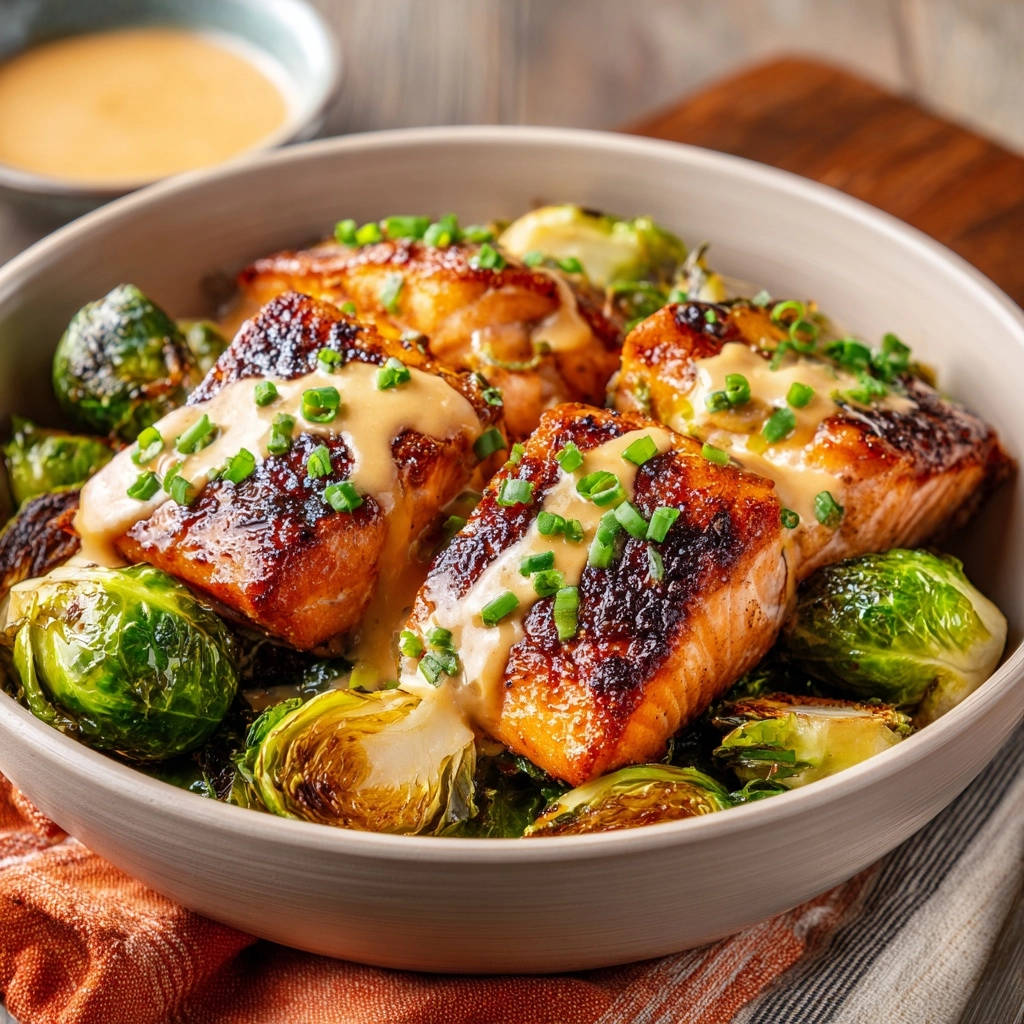
This Pan-Seared Salmon & Roasted Brussels Sprouts dish delivers restaurant-quality taste and presentation without the fuss.
It’s designed for efficiency, allowing you to prepare a sophisticated and healthy meal that feels special, even when time is tight.
The Perfect Harmony of Savory and Sweet
The rich, savory salmon and creamy pan sauce find their ideal counterpoint in the subtly sweet and earthy notes of the caramelized roasted Brussels sprouts.
This combination creates a balanced and deeply satisfying flavor profile that delights the palate.
Essential Tools for Pan-Seared Perfection
Heavy-Bottomed Skillet: A cast iron or quality stainless steel skillet provides excellent heat retention and distribution, which is crucial for achieving an even, beautiful sear on your salmon.
Baking Sheet: Essential for spreading your Brussels sprouts in a single layer, ensuring they roast evenly and caramelize instead of steaming.
Whisk: A small whisk is indispensable for smoothly emulsifying your creamy pan sauce, preventing lumps and ensuring a velvety texture.
Tongs or Spatula: Sturdy tongs or a thin, flexible metal spatula are perfect for carefully placing and flipping your delicate salmon fillets without tearing the skin.
Meat Thermometer (Optional but Recommended): For ultimate precision, an instant-read meat thermometer ensures your salmon reaches perfect doneness without any guesswork, guaranteeing moist results every time.
The Building Blocks of Flavor: Key Ingredients Explored
Spotlighting Your Salmon Fillets
Choose fresh, high-quality salmon fillets with the skin on for the best results. The skin is essential for developing that desirable crispy texture.
Look for fillets with vibrant color and firm flesh, free from any strong fishy odor.
Transforming Brussels Sprouts into Golden Bites
Select firm, bright green Brussels sprouts. Trim the tough ends and halve them through the core to ensure they roast evenly and develop a beautiful caramelized exterior.
Smaller sprouts tend to be sweeter and more tender.
Fats and Flavor Foundations: Olive Oil & Butter
Olive oil is excellent for roasting the Brussels sprouts and providing high-heat searing for the salmon’s initial crisp.
Butter, added to the pan after searing, forms the rich, flavorful base for our creamy sauce, imparting a luxurious mouthfeel.
Seasonings and the Creamy Sauce Essentials
Salt and black pepper are fundamental for seasoning both the salmon and sprouts, enhancing their natural flavors.
Vegetable broth, heavy cream, and a pinch of garlic powder create the savory, luscious sauce, while Dijon mustard (optional) adds a subtle tang and helps emulsify it beautifully.
Fresh Garnish: Chives or Green Onion Tops
A sprinkle of fresh chives or green onion tops is more than just a garnish; it adds a vibrant pop of color and a fresh, aromatic finish that brightens the entire dish.
Mastering the Method: Step-by-Step for Success
- Prepare Brussels Sprouts for Roasting:
Preheat your oven to 400°F (200°C) to get it nice and hot. In a large bowl, toss the trimmed and halved Brussels sprouts with 1 tablespoon of olive oil, 1/4 teaspoon of salt, and 1/8 teaspoon of black pepper.
Ensure they are spread in a single layer on a baking sheet; this is crucial for even roasting and optimal caramelization, preventing them from steaming.
- Roast to Tender Perfection:
Place the sprouts in the preheated oven and roast for 20-25 minutes, or until they are tender on the inside and beautifully caramelized and slightly crispy on the outside.
Remember to stir them halfway through the cooking time to ensure all sides get that golden-brown char.
- The Anti-Dryness Salmon Prep:
While the sprouts roast, prepare your salmon. Thoroughly pat your salmon fillets very dry on all sides with paper towels.
This critical step is key for achieving crispy skin and preventing the salmon from sticking to the pan, which can lead to uneven cooking and, ultimately, dryness. Season generously with the remaining salt and pepper.
- Heat the Skillet for Searing:
Place a heavy-bottomed skillet, such as cast iron or stainless steel, over medium-high heat. Add the remaining 1 tablespoon of olive oil.
Wait until the oil shimmers slightly; this indicates the pan is hot enough to create an immediate, perfect sear when the salmon is added.
- Mastering the Skin-Side Sear:
Carefully place the salmon fillets skin-side down in the hot pan. Critically, do not move them for 6-8 minutes.
This extended skin-side cooking gently cooks the fish from the bottom up, resulting in perfectly tender flesh and a gloriously crispy skin, while preventing the delicate top from overcooking and drying out.
- The Quick Flip to Finish:
Carefully flip the salmon and cook for just 1-2 more minutes, or until the salmon is cooked through to your desired doneness.
Aim for an internal temperature of 145°F (63°C) for medium, or until it flakes easily with a fork. Avoid overcooking at this stage, as even an extra minute can impact moisture.
- The Crucial Salmon Rest:
Immediately transfer the cooked salmon to a plate and let it rest for 5 minutes.
This vital resting period allows the juices to redistribute throughout the fish, guaranteeing moist, tender flakes with every bite and preventing them from escaping when you cut into it.
Round Out Your Meal
To complement your pan-seared salmon and roasted Brussels sprouts, consider these vegetable-focused dishes.
- For another way to enjoy Brussels sprouts with a touch of sweetness, try these Roasted Sweet Potato & Brussels Sprouts, which share a similar roasting technique.
- If you’re looking for a savory Brussels sprouts option, check out these Garlic Parmesan Roasted Brussels Sprouts for a different flavor profile.
- Crafting the Velvety Pan Sauce:
In the same skillet (no cleaning needed, as those browned bits add flavor!), reduce the heat to medium-low. Add the butter.
Once melted, stir in the vegetable broth, heavy cream, Dijon mustard (if using), and a pinch of garlic powder. Whisk constantly for 2-3 minutes until the sauce thickens slightly, then season with a pinch of pepper to taste.
- Assemble and Serve Your Masterpiece:
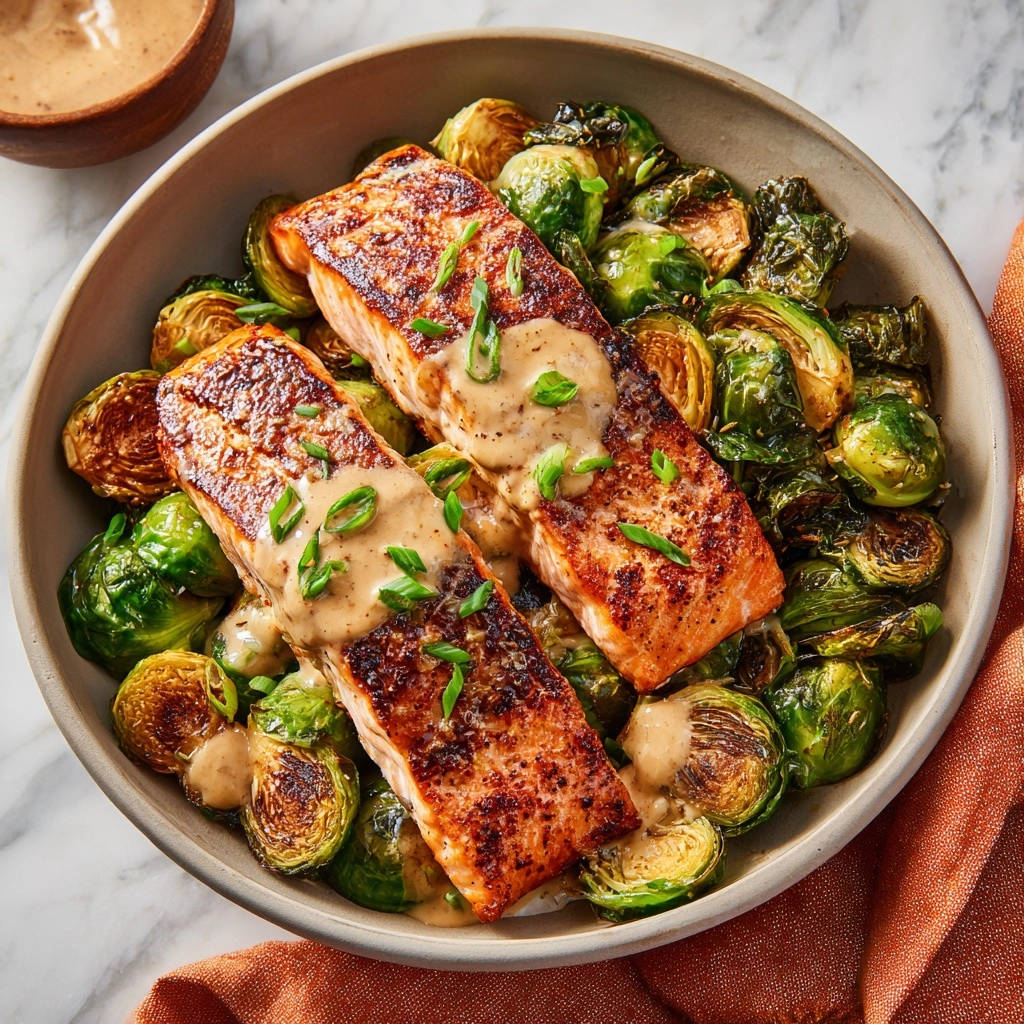
Divide the roasted Brussels sprouts between two bowls. Top each serving with a rested salmon fillet.
Drizzle generously with the creamy pan sauce and garnish with fresh chopped chives or green onions for a final flourish of flavor and color.
Chef’s Secrets: Elevating Your Pan-Seared Salmon & Brussels Sprouts
The Dry Salmon Imperative: Don’t skip patting your salmon completely dry with paper towels! It’s the single most important step for achieving that coveted crispy skin and prevents the fish from sticking to the pan.
Hot Pan, Cold Oil, Then Fish: Ensure your skillet is screaming hot before adding the oil, and the oil is shimmering before carefully placing the fish in the pan. This creates an immediate, beautiful sear.
Let the Skin Do the Work: The extended skin-side sear is revolutionary for moist salmon. Resist the urge to peek or flip too early; let it cook undisturbed to develop that incredible texture.
Don’t Overcrowd the Pan (or Baking Sheet!): Cook salmon in batches if necessary to ensure sufficient space. Similarly, make sure Brussels sprouts are in a single layer. Crowding leads to steaming rather than searing or roasting.
The Magic of Resting Salmon: Just like steak, salmon benefits immensely from resting. This prevents the juices from seeping out when sliced, keeping it incredibly succulent and flavorful.
Dijon Mustard: Your Secret Weapon for Sauce: While optional, Dijon adds a subtle tang and a wonderful depth of flavor to the sauce. It also acts as an emulsifier, enhancing the sauce’s richness without being overpowering.
Troubleshooting Common Challenges: Perfecting Your Dish
Problem: My Salmon Skin Isn’t Crispy
Ensure your salmon fillets are thoroughly patted dry before seasoning them; excess moisture prevents crisping. Use a heavy-bottomed skillet and make sure it’s sufficiently hot, with shimmering oil, before adding the fish.
Crucially, do not move the salmon during the initial skin-side sear to allow a crust to form undisturbed.
Problem: My Salmon is Dry and Overcooked
Overcooking is the primary culprit for dry salmon. Trust the “two-thirds cooked” visual cue for the skin-side sear, where the color changes, and then cook for only 1-2 minutes on the other side.
Using a meat thermometer to reach 145°F (63°C) and then resting the fish for 5 minutes are key preventative measures for perfectly moist results.
Problem: Brussels Sprouts are Soggy, Not Caramelized
Make sure your oven is preheated to the correct temperature (400°F/200°C) and spread the sprouts in a single layer on the baking sheet.
Overcrowding will cause them to steam instead of roast, so use two baking sheets if necessary. Stirring them halfway through helps expose all sides to the hot air for even charring.
Problem: My Pan Sauce is Too Thin or Not Thickening
Ensure you’re whisking constantly as the sauce reduces, allowing the liquid to evaporate and thicken naturally. If it’s still too thin after a few minutes, you can continue to gently simmer and whisk.
For a quick fix, mix a tiny bit of cornstarch (about 1/2 teaspoon) with a tablespoon of cold water into a slurry, then whisk it into the sauce and cook for another minute until it thickens.
Smart Serving, Storage, and Make-Ahead Strategies
Perfect Pairings: What to Serve Alongside
This Pan-Seared Salmon & Roasted Brussels Sprouts dish is a complete and satisfying meal on its own. However, it also pairs beautifully with a light grain like quinoa, a simple green salad with a bright vinaigrette, or even a side of fluffy mashed sweet potatoes.
For drinks, consider a crisp white wine such as Sauvignon Blanc or Pinot Grigio, which complements the richness of the salmon and sauce, or a light, refreshing lager.
Storing Leftovers for Delicious Meals
Store any leftover pan-seared salmon and roasted Brussels sprouts in an airtight container in the refrigerator for up to 2-3 days.
For optimal texture, especially for the sauce, it’s best to store the components separately if possible. Reheat gently in the microwave or a low oven to avoid drying out the salmon.
Make-Ahead Tips for Easy Weeknights
To streamline your cooking process, the Brussels sprouts can be trimmed and halved a day in advance and stored in the refrigerator. The pan sauce can also be made ahead of time; simply reheat it gently on the stove, adding a splash of broth or cream if it has become too thick.
For the freshest and most delicious results, it is always recommended to sear the salmon just before serving, as its texture is best immediately after cooking.
Your Questions Answered: FAQs About This Pan-Seared Salmon & Roasted Brussels Sprouts Recipe
Can I Use Skinless Salmon Fillets?
Yes, you can certainly use skinless salmon fillets, but be aware that you’ll miss out on the incredible crispy skin texture that is a highlight of this Pan-Seared Salmon & Roasted Brussels Sprouts recipe.
If using skinless, reduce the initial sear time to 4-5 minutes per side, or until the salmon is cooked through to your liking.
Can I Use Frozen Brussels Sprouts?
While fresh Brussels sprouts are highly recommended for achieving the best caramelization and flavor, you can use frozen ones in a pinch. Be sure to thaw them completely before preparing.
After thawing, pat them very dry with paper towels to remove excess moisture; this step is crucial to prevent them from becoming soggy during roasting.
What If I Don’t Have Dijon Mustard for the Sauce?
The Dijon mustard adds a subtle tang and helps emulsify the sauce, contributing to its velvety texture and balanced flavor. While highly recommended, you can omit it if you don’t have any.
Alternatively, you could add a tiny squeeze of fresh lemon juice at the very end of cooking the sauce for a similar bright, acidic counterpoint.
How Do I Know When Salmon is Perfectly Cooked?
The most accurate way to determine doneness is with an instant-read thermometer, aiming for an internal temperature of 145°F (63°C) for medium-cooked salmon.
Visually, the salmon will be opaque on the outside and just barely translucent in the center, flaking easily with a fork when gently pressed.
Can I Make This Dish Dairy-Free?
Yes, with a few substitutions, you can adapt this recipe to be dairy-free. You can substitute the butter with a plant-based butter alternative that’s suitable for sautéing.
For the heavy cream, full-fat coconut milk can be used (though it will impart a slightly different flavor profile), or opt for a suitable dairy-free cream alternative available in most grocery stores.
Savoring the Success: A Final Bite of Inspiration
We hope this comprehensive guide empowers you to create the most delicious and perfectly cooked Pan-Seared Salmon & Roasted Brussels Sprouts you’ve ever tasted. Say goodbye to dry, uninspired salmon and welcome a dish that’s both easy enough for a weeknight and impressive enough for guests.
Don’t just take our word for it-give this recipe a try tonight. We’re confident it will earn a permanent spot in your culinary repertoire. We’d love to see your creations; share your salmon masterpieces in the comments below!
Pan-Seared Salmon & Roasted Brussels Sprouts
Course: Main CourseCuisine: American CuisineDifficulty: easy2
servings15
minutes25
minutes40
minutesAmerican Cuisine
Ingredients
2 (6 ounce) salmon fillets, skin on
1 pound Brussels sprouts, trimmed and halved
2 tablespoons olive oil, divided
1/2 teaspoon salt, divided
1/4 teaspoon black pepper, divided
1 tablespoon butter
1/4 cup vegetable broth
1/4 cup heavy cream
1 teaspoon Dijon mustard (optional)
Pinch of garlic powder
1 tablespoon chopped fresh chives or green onion tops, for garnish
Directions
- Prepare Brussels Sprouts: Preheat oven to 400°F (200°C). In a large bowl, toss halved Brussels sprouts with 1 tablespoon olive oil, 1/4 teaspoon salt, and 1/8 teaspoon pepper. Spread in a single layer on a baking sheet. Roast for 20-25 minutes, or until tender and caramelized, stirring halfway through.
- Prepare Salmon (The Anti-Dryness Method!): While sprouts roast, prepare salmon. Pat salmon fillets very dry on all sides with paper towels. This is crucial for crispy skin and prevents sticking, which leads to uneven cooking. Season generously with the remaining 1/4 teaspoon salt and 1/8 teaspoon pepper.
- Heat a heavy-bottomed skillet (like cast iron or stainless steel) over medium-high heat. Add the remaining 1 tablespoon olive oil. Once the oil shimmers, carefully place salmon fillets skin-side down in the hot pan. Do not move them.
- Sear the salmon for 6-8 minutes, or until the skin is deeply golden brown and crispy, and the flesh has cooked about two-thirds of the way up the fillet (you’ll see the color change). This extended skin-side cooking gently cooks the fish from the bottom up without overexposing the delicate top flesh to direct heat, preventing dryness.
- Carefully flip the salmon and cook for just 1-2 more minutes, or until the salmon is cooked through to your desired doneness (internal temperature of 145°F / 63°C for medium, or just until it flakes easily with a fork). Do not overcook.
- Remove salmon from skillet and immediately transfer to a plate. Rest for 5 minutes. This crucial resting period allows the juices to redistribute throughout the fish, ensuring moist, tender flakes every time.
- Make the Sauce: In the same skillet (no need to clean), reduce heat to medium-low. Add butter. Once melted, stir in vegetable broth, heavy cream, Dijon mustard (if using), and garlic powder. Whisk constantly for 2-3 minutes until the sauce thickens slightly. Season with a pinch of pepper.
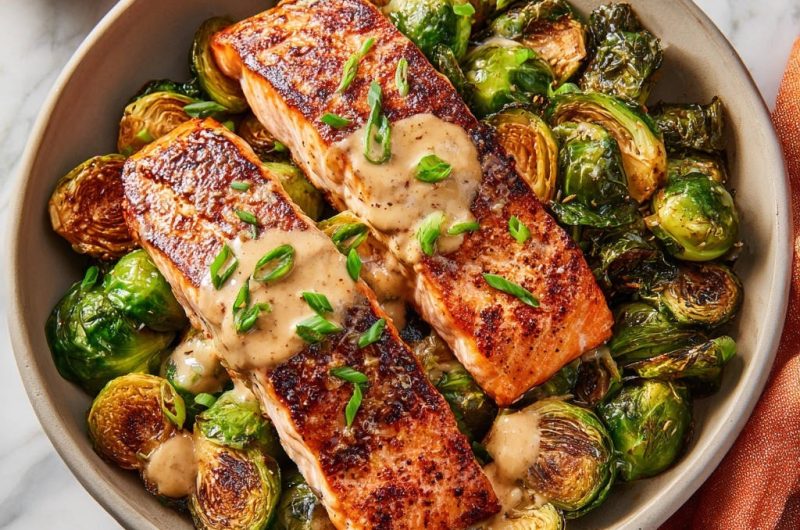
- Serve: Divide roasted Brussels sprouts between two bowls. Top with the rested salmon fillets. Drizzle generously with the creamy pan sauce and garnish with fresh chives or green onions.
Notes
- Patting salmon very dry is crucial for crispy skin. Don’t skip the resting period after cooking!