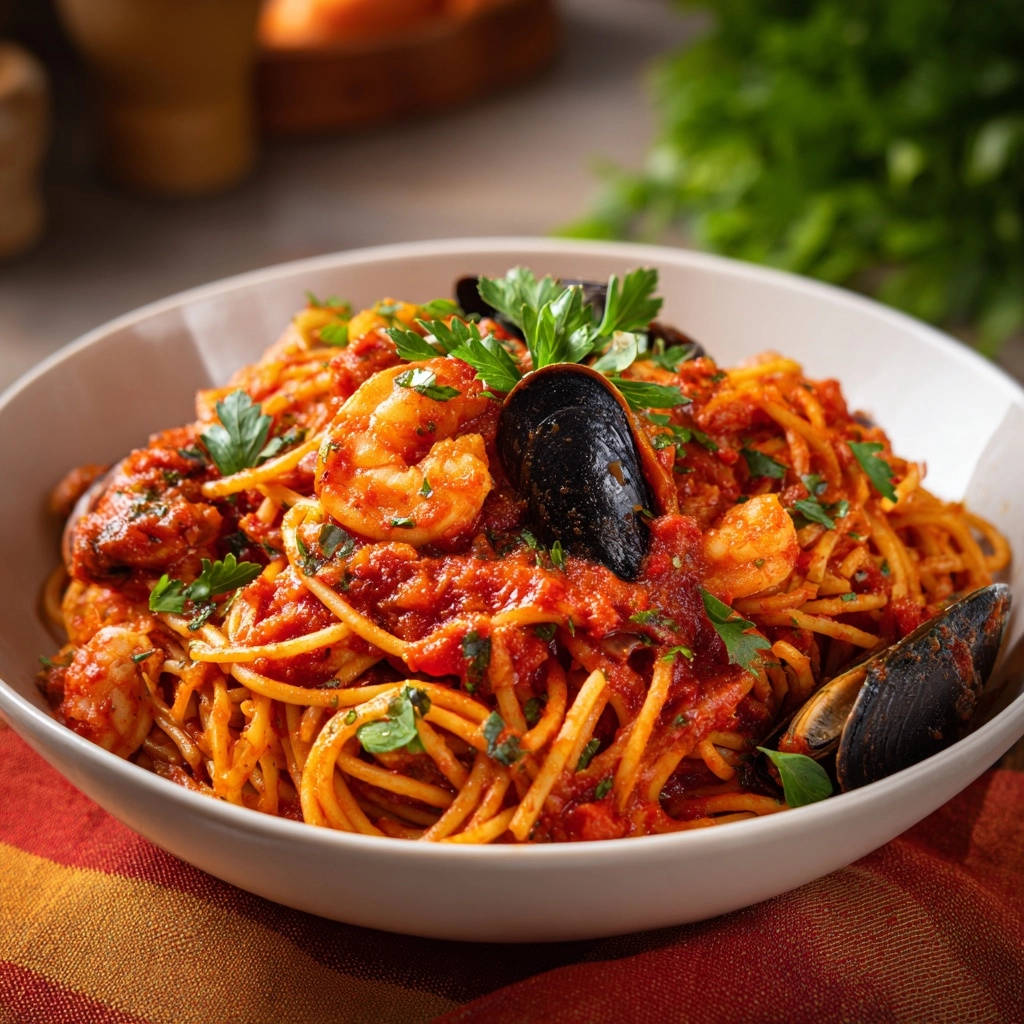
Seafood Spaghetti: Master the Sauce That Clings!
Have you ever spent time lovingly preparing Seafood Spaghetti, only to find the delicious sauce pooling at the bottom of the plate, stubbornly refusing to coat your pasta? It’s a common kitchen frustration that can turn a gourmet meal into a slippery disappointment.
As a seasoned food strategist, I’ve perfected a technique that guarantees every strand of this delightful Seafood Spaghetti is gloriously enveloped in a rich, flavorful sauce. This isn’t just another recipe; it’s a solution designed to bring restaurant-quality elegance and perfect cling to your home cooking.
Why This Seafood Spaghetti Recipe Belongs in Your Kitchen
The “Clinging Sauce” Secret Unveiled
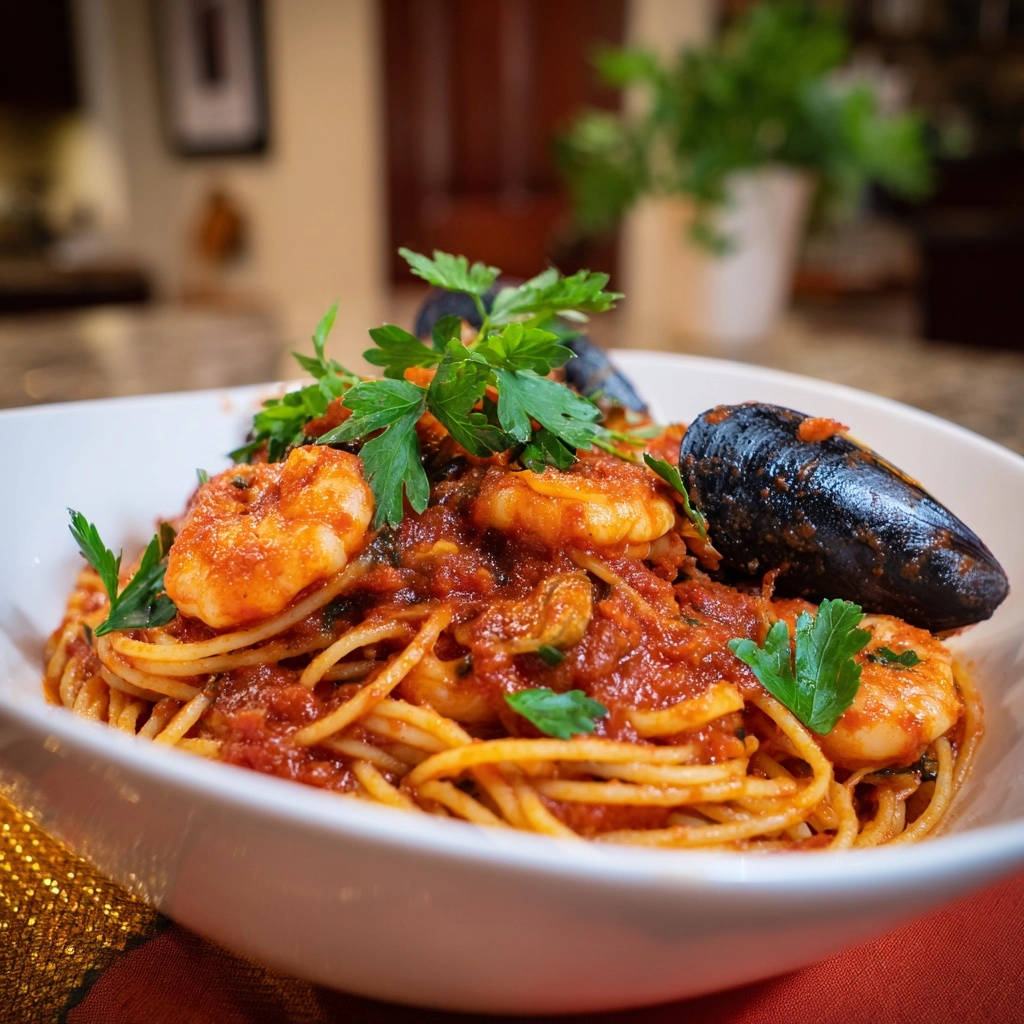
This Seafood Spaghetti recipe specifically addresses the age-old problem of watery pasta sauce. We unlock the secret to a beautifully emulsified sauce that lovingly adheres to every strand of spaghetti.
Get Our Best Recipes Weekly!
Join thousands of food lovers and get delicious recipes delivered to your inbox.
Through precise timing and the strategic use of starchy pasta water, your sauce transforms into a luscious, clinging embrace. No more sad, naked noodles – just pure flavor in every bite.
Effortless Elegance: Restaurant-Quality at Home
Impress your family and friends with a dish that looks and tastes like it came from a high-end trattoria. Despite its sophisticated appearance, this recipe is surprisingly straightforward to prepare.
It’s the ideal choice for special occasions or when you simply want to elevate a weeknight meal with minimal fuss.
What to Try Next
To round out your seafood spaghetti meal, consider these complementary dishes.
- For a creamy, comforting grain alongside your pasta, try Southern Baked Grits with Crispy Smoked Turkey.
- Finish your meal with a sweet treat like this No-Bake Cherry Dream Pie, offering bright fruit flavors.
Speedy & Satisfying: Your Weeknight Dinner Solution
Don’t let the gourmet feel fool you; this Seafood Spaghetti is incredibly efficient. Most of the cooking time involves simmering, leaving you free to multitask.
You can have a deeply satisfying, flavorful meal on the table relatively quickly, making it perfect for busy evenings without sacrificing quality.
Gather Your Treasures: Essential Ingredients for Seafood Spaghetti
The Star Seafood Cast: Shrimp and Mussels
Raw Shrimp: Choose firm, translucent shrimp, peeled and deveined, for the best texture and flavor. Freshness is paramount for this seafood pasta.
Fresh Mussels: Select mussels with tightly closed shells, indicating freshness. Remember to scrub them clean and de-beard them just before cooking.
Pasta Perfect: Choosing Your Spaghetti
Spaghetti: Traditional spaghetti is perfect here, its long strands providing ample surface area for the clinging sauce. Quality spaghetti holds its shape well.
Cooking it “very al dente” is crucial. This slight undercooking allows the pasta to finish absorbing the rich tomato sauce, achieving that signature cling.
Foundation Flavors: Garlic, Tomatoes & Olive Oil
Olive Oil: A good quality olive oil provides a rich base for sautéing the garlic and building the sauce’s initial flavors. Its fruity notes complement the seafood beautifully.
Garlic: Freshly minced garlic is non-negotiable for an aromatic and vibrant tomato sauce. It infuses the oil with warmth and depth.
Crushed Tomatoes: A 28-ounce can of good quality crushed tomatoes forms the hearty, sweet, and tangy backbone of our sauce. Look for brands with minimal added ingredients for the purest flavor.
Freshness Factor: The Power of Parsley
Fresh Parsley: This vibrant herb adds a burst of freshness and color that brightens the entire dish. It’s essential both stirred into the sauce and as a garnish.
Salt and Pepper: Seasoning to Perfection
Salt and Black Pepper: These fundamental seasonings enhance and balance all the flavors. Always taste and adjust as you go to achieve your ideal profile for this delicious seafood pasta.
Essential Tools for Your Seafood Spaghetti Journey
Large Pot: For perfectly cooking your spaghetti to al dente, ensuring even heat distribution and ample space.
Deep Skillet or Dutch Oven: This is the versatile workhorse for building the sauce, cooking the seafood, and ultimately combining everything for the best clinging sauce.
Tongs: Absolutely essential for vigorous tossing, which is key to achieving that perfect sauce emulsification and cling.
Lid for Skillet: Crucial for steaming the mussels effectively, helping them open quickly and evenly.
Your Culinary Compass: Crafting Perfect Clinging Seafood Spaghetti
1. Perfecting the Pasta Base
Cook Spaghetti to Very Al Dente: Bring a large pot of salted water to a rolling boil. Add your spaghetti and cook it for about 2 minutes less than the package recommends. This ensures it finishes cooking in the sauce and absorbs all the flavors, vital for the cling.
Reserve Starchy Pasta Water: Before draining, scoop out 1.5 cups of the cloudy, starchy water. This liquid is your secret weapon for emulsifying and thickening the sauce. Drain the pasta immediately and set aside.
2. Building the Flavor Foundation
Sauté the Garlic: In your large, deep skillet or Dutch oven, heat the olive oil over medium heat. Add the minced garlic and cook for just 1 minute until it becomes wonderfully fragrant, taking care not to let it burn, which can make it bitter.
3. Deepening the Tomato Harmony
Simmer the Crushed Tomatoes: Pour in the crushed tomatoes, stir well, and bring them to a gentle simmer. Reduce the heat to low and let it cook uncovered for about 10 minutes. This allows the tomato flavors to concentrate and meld beautifully. Season with salt and freshly ground black pepper.
4. Introducing the Ocean’s Bounty
Add Mussels First: Increase the heat to medium-low. Carefully place the scrubbed and de-bearded mussels into the simmering tomato sauce, then immediately cover the pan with a lid. Cook for 2-3 minutes, just until their shells begin to crack open.
Incorporate Shrimp: Add the peeled and deveined shrimp to the pan, re-cover, and cook for another 2-3 minutes. Continue until all the mussels are fully opened and the shrimp are opaque and beautifully pink. Discard any mussels that remain stubbornly closed.
5. The Magic of the Cling: Pasta Meets Sauce
Combine and Toss: This is the crucial step! Transfer the partially cooked spaghetti directly into the skillet with the sauce and seafood. Add about 1/2 cup of the reserved starchy pasta water.
Vigorous Emulsification: Using tongs, toss the pasta vigorously with the sauce and seafood for 2-3 minutes. The starchy water, combined with the motion, will create a luxurious, emulsified sauce that perfectly coats every strand of seafood pasta. Continue to add more pasta water, a tablespoon at a time, if the sauce becomes too thick, ensuring ideal lubrication and cling.
Finish Cooking: The spaghetti will absorb the rich flavors of the sauce as it finishes cooking during this tossing process, enhancing the overall taste of your Seafood Spaghetti.
6. The Grand Finale: Finishing & Serving
Stir in Parsley and Season: Stir in the chopped fresh parsley. Taste the dish and adjust seasoning with additional salt and black pepper as needed to achieve your desired flavor balance.
Serve Immediately: Ladle generous portions into bowls, garnishing with extra fresh parsley for a vibrant finish. Enjoy that truly clinging, flavorful Seafood Spaghetti!
Chef’s Secrets: Elevate Your Seafood Spaghetti Experience
The Al Dente Advantage for Sauce Adhesion
Undercooking your spaghetti slightly is the cornerstone of this recipe’s success. It allows the pasta to finish cooking in the flavorful sauce, absorbing it like a sponge and creating that coveted cling.Harnessing Starchy Pasta Water Effectively
Don’t underestimate the power of pasta water. Its starch content is what binds the sauce to the pasta. Use it judiciously, adding it gradually until you reach your desired consistency and cling for your seafood pasta.Selecting the Freshest Seafood for Optimal Flavor
The quality of your seafood dramatically impacts the final dish. Choose firm, translucent shrimp and mussels with tightly closed shells for the best taste and texture in your Seafood Spaghetti.Don’t Rush the Tomato Simmer
Allowing the crushed tomatoes to simmer gently for 10 minutes helps to deepen their flavor, sweeten them slightly, and reduce their water content, creating a richer base for your tomato sauce.Taste and Adjust: Your Personal Touch
Always taste your sauce before serving and adjust seasoning. Seafood and tomatoes have varying salt levels, so a final taste test ensures perfect balance and a truly exceptional Seafood Spaghetti.Solving Common Culinary Conundrums with Seafood Spaghetti
My Sauce Isn’t Clinging Enough!
If your sauce still feels too watery, it likely needs more starch or reduction. Continue tossing vigorously with tongs, allowing more of the reserved pasta water to emulsify. The pasta water technique is highly effective for this clinging sauce.
If all pasta water is used, a tiny amount of cornstarch slurry (1 tsp cornstarch mixed with 1 tsp cold water) can be added at the end, stirring until thickened, but this is usually not necessary with the correct pasta water method.
Oh No, Overcooked Seafood!
Seafood, especially shrimp and mussels, cooks very quickly. The key is to add them at the very end of the sauce-making process and cook just until opaque (shrimp) and open (mussels). If your seafood is rubbery, it was cooked too long.
Next time, be vigilant with timing and remove from heat immediately once done. Precision ensures perfectly tender shrimp pasta and mussels.
Mussels Refuse to Open
Discard any mussels that do not open after cooking. They may have been dead before cooking, or contain grit, and are not safe to eat. Ensure they are fresh to begin with and have closed shells before cooking.
Beyond the Plate: Serving, Storage & Make-Ahead Tips
Creative Serving Suggestions
While delicious on its own, this Seafood Spaghetti pairs wonderfully with a crisp green salad dressed in a light vinaigrette. A side of crusty garlic bread is also perfect for soaking up any leftover clinging sauce.
Consider a sprinkle of grated Parmesan (though traditionally not with seafood in Italy, it’s a popular personal preference) or a dash of red pepper flakes for an extra kick.
Storing Your Delicious Leftovers
Store any leftover Seafood Spaghetti in an airtight container in the refrigerator for up to 2-3 days. The clinging sauce holds up surprisingly well.
Reheat gently on the stovetop over low heat, adding a splash of water or broth to loosen the sauce if needed, ensuring the shrimp pasta retains its moisture.
Can You Make Seafood Spaghetti Ahead?
While best enjoyed fresh, you can prepare the tomato sauce base (steps 2 & 3) a day in advance. This saves considerable time on a busy day.
Cook the spaghetti and seafood closer to serving time for optimal texture. Reheat the sauce, then proceed with steps 4-6 for a fresh finish to your seafood pasta.
Your Seafood Spaghetti Questions Answered
Can I Make This Gluten-Free?
Absolutely! Simply substitute regular spaghetti with your favorite brand of gluten-free spaghetti. The “cling” technique will work just as effectively with gluten-free pasta.
You might need slightly less reserved pasta water, as some gluten-free varieties release more starch, so adjust the clinging sauce consistency accordingly.
What Other Seafood Can I Use?
This recipe is highly adaptable. Feel free to add or substitute other quick-cooking seafood like scallops, calamari rings, or even firm white fish (like cod or snapper) cut into chunks.
Add these at the same time as the shrimp, being mindful of their specific cooking times to prevent overcooking. The tomato sauce base is versatile.
Can I Add Vegetables?
Yes, you can! Sliced cherry tomatoes, spinach, or chopped bell peppers would be delicious additions to your Seafood Spaghetti. They add freshness and extra nutrients.
Sauté heartier vegetables like bell peppers with the garlic, and stir in leafy greens like spinach at the very end to wilt into the hot sauce.
How Do I Make It Spicier?
For a kick of heat, add a pinch of red pepper flakes with the garlic in step 2. This infuses the oil with a subtle warmth that permeates the entire tomato sauce.
You can also garnish with extra fresh chili if you enjoy a bolder spice level, adding a vibrant finish to your Seafood Spaghetti.
Ready to Impress? Share Your Seafood Spaghetti Masterpiece!
You’ve now mastered the art of Seafood Spaghetti with a sauce that truly clings! No more bland, watery pasta – just rich, flavorful strands perfectly coated in a delicious seafood embrace. We encourage you to try this recipe tonight and experience the difference of a truly clinging sauce.
Did you make this recipe? We’d love to see your creations! Share your photos and thoughts in the comments below, or tag us on social media. Your culinary success is our greatest reward!
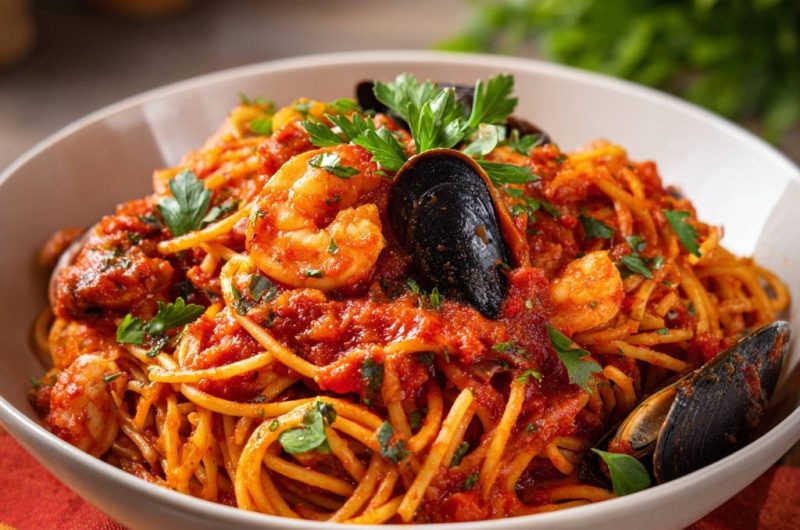
Seafood Spaghetti
Course: Main CourseCuisine: Italian CuisineDifficulty: easy4
servings20
minutes30
minutes50
minutesItalian Cuisine
Ingredients
12 ounces spaghetti
2 tablespoons olive oil
4 cloves garlic, minced
1 (28-ounce) can crushed tomatoes
1 pound raw shrimp, peeled and deveined
1 pound fresh mussels, scrubbed and de-bearded
1/2 cup fresh parsley, chopped, plus more for garnish
Salt and black pepper to taste
Directions
- Cook the spaghetti: Bring a large pot of salted water to a boil. Add the spaghetti and cook according to package directions until very al dente (about 2 minutes less than recommended). This is crucial for our clinging sauce! Before draining, reserve 1.5 cups of the starchy pasta water. Drain the pasta and set aside.
- Start the sauce: While the pasta cooks, heat the olive oil in a large, deep skillet or Dutch oven over medium heat. Add the minced garlic and cook for 1 minute until fragrant, being careful not to burn it.
- Simmer the tomatoes: Pour in the crushed tomatoes. Bring to a gentle simmer, then reduce heat to low and let it cook for about 10 minutes, allowing the flavors to meld. Season with salt and black pepper.
- Add the seafood: Increase the heat to medium-low. Add the mussels to the sauce, covering the pan with a lid. Cook for 2-3 minutes, or until the mussel shells just begin to open. Then, add the shrimp, re-cover, and cook for another 2-3 minutes, or until the mussels are fully opened and the shrimp are opaque and pink. Discard any mussels that do not open.
- Achieve the cling: This is where the magic happens! Transfer the partially cooked spaghetti directly into the skillet with the sauce and seafood. Add about 1/2 cup of the reserved pasta water. Toss vigorously with tongs for 2-3 minutes. The starchy pasta water will help the sauce emulsify and thicken, creating that beautiful, clinging texture you’re looking for. Add more pasta water, a tablespoon at a time, if the sauce seems too thick or needs more lubrication to coat the noodles perfectly. The pasta will finish cooking in the sauce, absorbing its flavor.
- Finish and serve: Stir in the chopped fresh parsley. Taste and adjust seasoning as needed. Serve immediately, garnished with extra fresh parsley. Enjoy that perfectly coated pasta!
Notes
- The secret to a clinging sauce is cooking pasta very al dente and finishing it in the sauce with reserved pasta water.