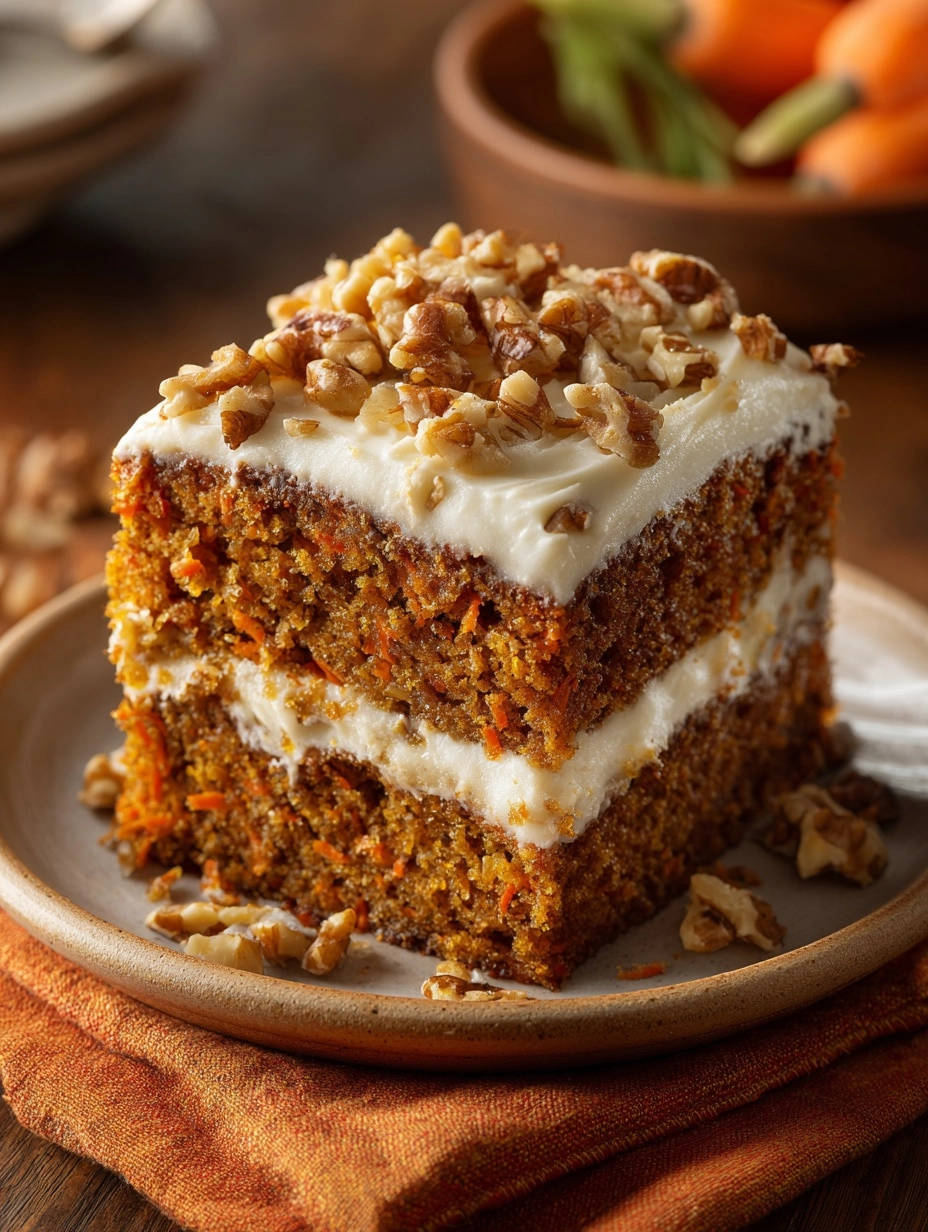
Classic Carrot Cake: The Secret to a Perfectly Moist Crumb
Ever felt the disappointment of cutting into a carrot cake that promises delight but delivers only dryness? That struggle is real, and it’s why I’m so excited to share my perfected recipe for Classic Carrot Cake.
This isn’t just another recipe; it’s a meticulously crafted guide guaranteeing a consistently tender, incredibly moist crumb every single time. Get ready to bake a Classic Carrot Cake that will become your most requested dessert.
Why THIS Classic Carrot Cake Recipe Will Be Your New Favorite
The “No More Dry Cake!” Promise: Our Signature Guarantee
Our recipe expertly balances wet and dry ingredients, utilizing vegetable oil for superior moisture retention that butter simply can’t match. We also guide you on precise mixing techniques, avoiding the overdevelopment of gluten, which is a common culprit for dry cakes.
Get Our Best Recipes Weekly!
Join thousands of food lovers and get delicious recipes delivered to your inbox.
The finely grated carrots are integral, releasing their natural moisture into the batter during baking, further contributing to that desired tender texture.
Unforgettable Flavor: The Perfect Balance of Spices and Sweetness
This Classic Carrot Cake is a symphony of warm, comforting flavors. A thoughtful blend of ground cinnamon and nutmeg creates an aromatic base that perfectly complements the sweetness of both granulated and light brown sugars.
If you’re aiming for that perfect crumb, a decadent chocolate walnut cake offers a wonderfully fudgy alternative.
The hint of molasses from the brown sugar adds a depth that truly sets this cake apart from others, making each bite incredibly satisfying and complex.
That Dreamy Cream Cheese Frosting: The Ultimate Pairing
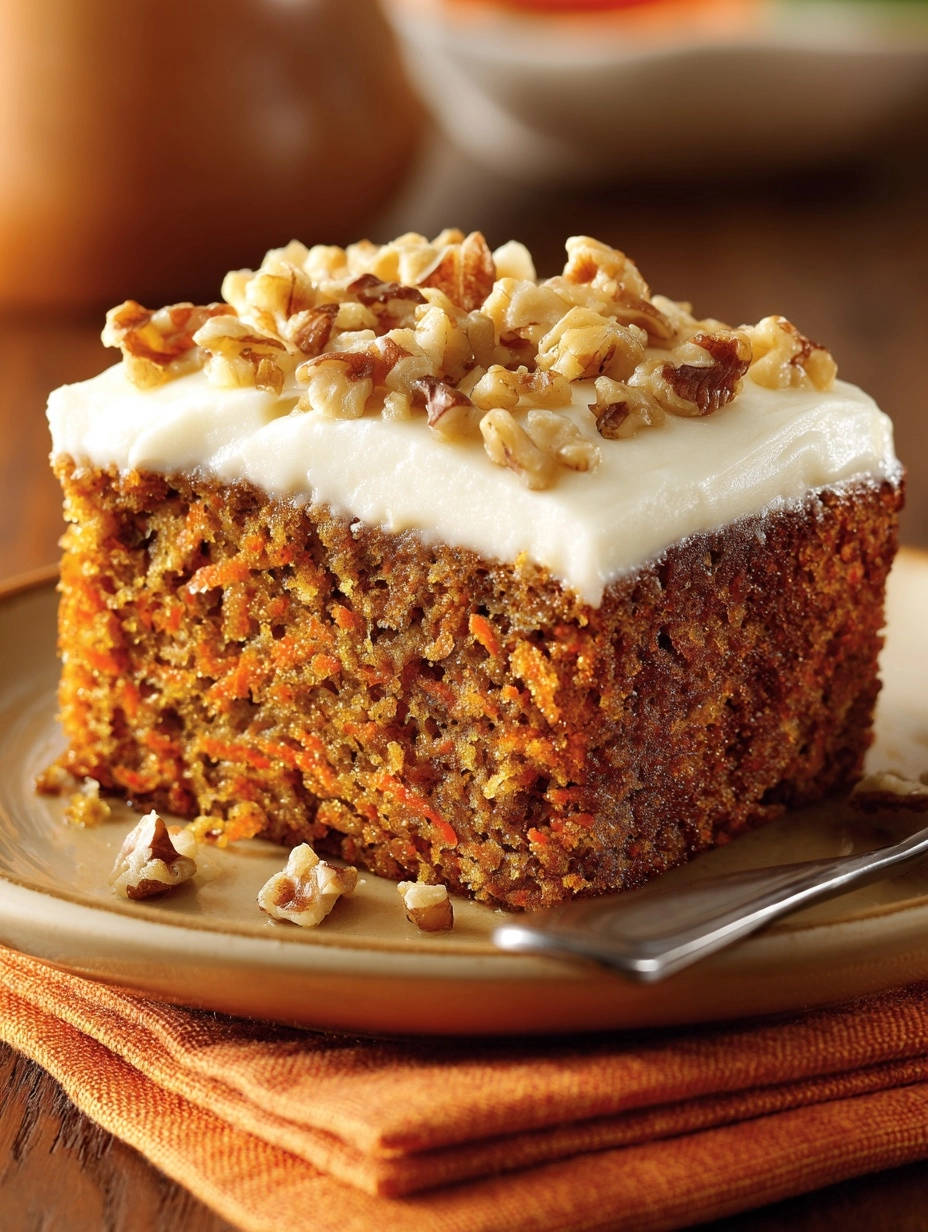
No Classic Carrot Cake is complete without its iconic cream cheese frosting. Ours is luxuriously smooth, tangy, and sweet, providing the perfect creamy counterpoint to the spiced cake.
Its rich consistency perfectly complements the moist cake layers, bringing the entire dessert together into a harmonious, irresistible experience.
Essential Ingredients for Your Carrot Cake Masterpiece
For the Irresistibly Moist Cake Base
-
Flour & Sweeteners: The Building Blocks
All-purpose flour provides the essential structure for our cake, ensuring it holds its form beautifully. Using the correct measure is crucial to avoid a dense texture.
Granulated sugar offers straightforward sweetness, while light brown sugar adds moisture and a subtle caramel-like depth due to its molasses content.
-
Spices & Leavening: Flavor and Lift
Baking soda is our primary leavening agent, reacting with the acidic ingredients (like brown sugar) to create lift and a tender crumb. Fresh baking soda is always best.
Ground cinnamon and ground nutmeg are the heart of the cake’s signature warm, autumnal flavor profile. Salt is essential for balancing all the sweet elements and enhancing the spice notes.
-
Liquid Gold: Oil, Eggs, and Vanilla
Vegetable oil is key to our “no more dry cake” promise, as it remains liquid at room temperature, contributing significantly more lasting moisture than solid fats like butter.
Large eggs bind the ingredients, provide structure, and contribute to the cake’s richness and tender texture. Vanilla extract elevates all the flavors, adding a fragrant warmth.
-
The Star of the Show: Freshly Grated Carrots
Finely grated carrots are paramount for a consistently moist and evenly textured cake. Their small size helps them soften and release moisture without creating large, chunky bits.
Chopped walnuts add a delightful textural contrast and nutty flavor, complementing the spices perfectly. Ensure they are fresh for the best taste.
Crafting the Velvety Cream Cheese Frosting
-
Dairy Delights: Cream Cheese & Butter
Softened, full-fat cream cheese is non-negotiable for a rich, tangy, and stable frosting. Ensure it’s at room temperature to prevent lumps.
Softened unsalted butter provides richness, structure, and a smooth mouthfeel. Using unsalted butter allows you to control the overall saltiness of the frosting.
-
Sweetness & Sift: Powdered Sugar’s Role
Powdered sugar (confectioners’ sugar) gives the frosting its characteristic silky-smooth texture and sweetness. Sifting it is crucial to prevent a grainy frosting.
-
Finishing Touches: Vanilla and Salt
A good quality vanilla extract enhances the creamy, sweet flavors of the frosting, tying it beautifully to the spiced cake. A tiny pinch of salt masterfully cuts through the sweetness, balancing the overall taste.
Optional Flair: The Perfect Walnut Garnish
A sprinkling of additional chopped walnuts on top of the frosted cake not only adds an appealing visual texture but also reinforces the nutty notes within the cake layers.
This simple garnish elevates the presentation of your homemade Classic Carrot Cake.
Essential Kitchen Tools for Your Baking Success
Baking Pans & Preparation Aids
You will need two 9-inch round cake pans to create perfect, even layers. Quality pans ensure uniform baking.
Parchment paper rounds are a baker’s best friend for ensuring easy release, especially when paired with a light coating of non-stick spray or a traditional grease-and-flour method.
Mixing & Measuring Essentials
Several large mixing bowls are necessary for separating wet and dry ingredients. A reliable whisk ensures thorough combination of dry components.
For incorporating ingredients gently, a sturdy spatula or spoon is ideal. Accurate measuring cups and spoons are fundamental for precise ratios, directly impacting the cake’s texture.
An electric mixer (handheld or stand mixer) is highly recommended for achieving the perfectly smooth and fluffy cream cheese frosting.
Cooling & Assembling Tools
A sturdy wire rack is indispensable for allowing your baked cake layers to cool completely and evenly, preventing condensation build-up.
An offset spatula or even a regular butter knife works wonderfully for spreading frosting smoothly and evenly between layers and over the cake’s surface.
Your Step-by-Step Guide to Classic Carrot Cake Perfection
-
Getting Started: Preheat Oven & Prepare Pans
Preheating your oven to 350°F (175°C) is the crucial first step; it ensures a consistently hot environment for your cake to rise properly from the moment it enters the oven.
Take the time to thoroughly grease and flour two 9-inch round cake pans, or line them with parchment paper. This meticulous preparation prevents sticking, guaranteeing your beautiful layers release without issue.
-
The Foundation: Combining Dry Ingredients
In a large mixing bowl, whisk together the all-purpose flour, granulated sugar, brown sugar, baking soda, cinnamon, nutmeg, and salt.
Whisking thoroughly ensures that all the leavening agents and spices are evenly distributed, which is vital for a uniform rise and consistent flavor throughout your Classic Carrot Cake.
-
Liquid Gold: Blending Wet Ingredients
In a separate medium bowl, combine the vegetable oil, large eggs, and vanilla extract. Whisk these ingredients together until they are fully integrated and smooth.
This creates a homogenous wet mixture, ready to be incorporated into the dry ingredients without clumping, ensuring even moisture distribution.
-
The Critical Mix: Preventing a Dry Cake
Pour the wet ingredients into the dry mixture. Using a spatula or spoon, mix gently just until combined, seeing no streaks of dry flour.
Do not overmix! Overmixing develops gluten, which can lead to a tough, dense, and disappointingly dry cake. After mixing, gently fold in the finely grated carrots and 1 cup of chopped walnuts.
-
Baking Smart: The Toothpick Test Secret for Perfect Doneness
Divide the prepared batter evenly between your two cake pans. Bake for 30-35 minutes, but begin checking for doneness early.
Your secret weapon against a dry cake is the clean toothpick test: insert a wooden skewer or toothpick into the center of the cake; if it comes out clean, the cake is perfectly baked. Even a few extra minutes can quickly transform a moist cake into a dry one, so trust the toothpick!
-
Cooling Patience for Perfect Structure
Allow the cakes to cool in their pans on a wire rack for 10-15 minutes. This initial cooling period allows the cake structure to set and firm up before handling.
After this, carefully invert the cakes onto the wire rack to cool completely. It is absolutely essential that the cake layers are stone-cold before frosting; warm cakes will melt your beautiful cream cheese frosting.
-
Whipping Up the Velvety Cream Cheese Frosting
While the cakes cool, prepare your luscious cream cheese frosting. In a large bowl, use an electric mixer to beat the softened cream cheese and butter until they are light, smooth, and creamy.
Gradually add the sifted powdered sugar, beating on low speed until it’s fully incorporated, then increase speed to medium and beat until the frosting is fluffy. Stir in the vanilla extract and a tiny pinch of salt to balance the sweetness.
-
Assembling Your Stunning Layer Cake
Once your cake layers are completely cool, place one layer onto your serving plate or stand. Spread approximately one-third of the prepared cream cheese frosting evenly over the top.
Carefully place the second cake layer on top, then spread the remaining frosting over the top and sides of the entire cake. Garnish generously with additional chopped walnuts, if desired, for a final flourish. Serve and savor your perfectly moist Classic Carrot Cake!
Chef’s Secrets: Elevate Your Carrot Cake Game
-
The Finer the Grate, The Moister the Cake
For the ultimate moist crumb, always finely grate your carrots. This ensures they soften fully during baking and disperse evenly, releasing their natural moisture into the batter without creating large, tough chunks.
A food processor with a grating attachment makes this task quick and easy.
-
Resist the Urge to Overmix – It’s Key!
Once you’ve added the wet ingredients to the dry, mix only until just combined, seeing no visible streaks of flour. Overmixing activates gluten, leading to a tough, rubbery, and dry cake texture.
Gentle folding after combining the main batter is crucial for distributing the carrots and walnuts without developing excess gluten.
-
Mastering the Clean Toothpick Test: Your Best Indicator
The toothpick test is your best friend for perfectly baked cakes. Insert a wooden skewer into the center of the cake; if it comes out with moist crumbs but no wet batter, your cake is done.
Begin checking a few minutes before the recipe’s minimum bake time to prevent overbaking, which is a primary cause of dry cake.
-
Achieving Silky Smooth Cream Cheese Frosting
Always ensure your cream cheese and butter are at proper room temperature (softened, but not melted) before beating. This prevents lumps and ensures a perfectly emulsified, smooth frosting.
Sift your powdered sugar before adding it gradually; this eliminates any lumps and contributes to that desirable velvety texture.
-
Patience is a Virtue: Cool Cakes Completely
Resist the temptation to frost warm or even slightly warm cake layers. Any residual heat will melt your carefully prepared cream cheese frosting, causing it to slide off and create a messy result.
Allowing cakes to cool completely (several hours or even overnight) ensures a stable foundation for your beautiful frosting.
Troubleshooting Your Classic Carrot Cake: Common Issues & Quick Fixes
Help! My Classic Carrot Cake Turned Out Dry.
A dry cake is often caused by overbaking or overmixing. Next time, use a timer and start checking doneness with the toothpick test a few minutes before the recommended bake time.
Also, ensure you mix the batter only until just combined, stopping as soon as no dry streaks of flour remain, to avoid developing too much gluten.
My Cake Sank in the Middle – What Happened?
A sunken cake usually indicates underbaking, meaning the center didn’t fully cook and set. It can also be caused by old or inactive baking soda.
Ensure your leavening agents are fresh, and always perform the clean toothpick test in the very center of the cake, baking a few minutes longer if necessary.
My Cream Cheese Frosting is Too Runny (or Too Stiff).
If your frosting is too runny, add more sifted powdered sugar, one tablespoon at a time, beating well after each addition until the desired consistency is reached.
For frosting that’s too stiff, add a very small amount (half a teaspoon) of milk or cream, beating until smooth, and repeat if needed.
Enjoying and Preserving Your Homemade Masterpiece
Elegant Serving Suggestions for Your Carrot Cake
Serve your Classic Carrot Cake chilled for the best texture and flavor. A light dusting of ground cinnamon or a few curls of orange zest can add an extra touch of elegance.
For individual slices, a small dollop of whipped cream or a fresh mint sprig provides a beautiful, fresh garnish.
Storage Tips for Lasting Freshness
Due to its cream cheese frosting, this Classic Carrot Cake must be stored in the refrigerator. Place it in an airtight cake carrier or cover it loosely with plastic wrap.
When stored correctly, your cake will remain deliciously moist for up to 5 days. For optimal flavor and texture, let slices come to room temperature for about 20-30 minutes before serving.
Make-Ahead Magic: Baking Ahead of Time
You can bake the cake layers up to two days in advance. Once completely cool, wrap them tightly in plastic wrap and store at room temperature.
The cream cheese frosting can also be made a day ahead and stored in an airtight container in the refrigerator. Before using, let it come to room temperature and re-whip it briefly until fluffy again.
What Else to Try
Since you enjoyed this carrot cake, explore more savory dishes featuring carrots.
- For a satisfying main course, consider the Creamy Garlic Herb Chicken & Carrots, which also highlights tender carrots.
- If you’re in the mood for something with a bit of spice, the Savory Beef & Carrot Curry offers a different way to enjoy carrots with tender beef.
Classic Carrot Cake FAQs: Your Questions Answered
Can I use pre-shredded carrots from the grocery store?
While convenient, pre-shredded carrots are often thicker and drier than freshly grated ones, which can impact the cake’s moisture and texture. For the best, moist results, we highly recommend grating them fresh.
Freshly grated carrots yield finer strands that integrate better and release more moisture during baking.
What if I don’t have light brown sugar?
You can substitute dark brown sugar, but it will yield a slightly deeper molasses flavor and color. Alternatively, you can use granulated sugar, but your cake might be slightly less moist and have less depth of flavor.
For the specific balance of sweetness and moisture intended in this recipe, light brown sugar is ideal.
Can this Classic Carrot Cake recipe be made gluten-free?
Yes, this recipe can be adapted to be gluten-free. Substitute the all-purpose flour with an equal amount of a high-quality 1:1 gluten-free baking flour blend that contains xanthan gum.
No other significant adjustments should be needed, but always ensure your blend is suitable for baking.
How long does homemade Classic Carrot Cake last?
When properly stored in an airtight container in the refrigerator, your homemade Classic Carrot Cake will stay fresh and delicious for 4 to 5 days.
Beyond this, while still safe to eat, the quality and moisture might start to diminish.
Can I freeze Classic Carrot Cake?
Absolutely! You can freeze unfrosted cake layers wrapped tightly in plastic wrap and then foil for up to 2-3 months. Thaw them overnight in the refrigerator before frosting.
A fully frosted cake can also be frozen; flash-freeze until the frosting is firm, then wrap tightly in plastic wrap and foil. Thaw in the refrigerator before serving.
Your Perfectly Moist Classic Carrot Cake Awaits!
Now that you’re armed with all the secrets, you’re ready to create the most incredibly moist and flavorful Classic Carrot Cake you’ve ever tasted. This recipe truly delivers on its promise of “no more dry cake!”
Gather your ingredients, preheat your oven, and prepare for pure baking success. We can’t wait to see your masterpieces! Share your creations with us, or ask any further questions in the comments below.
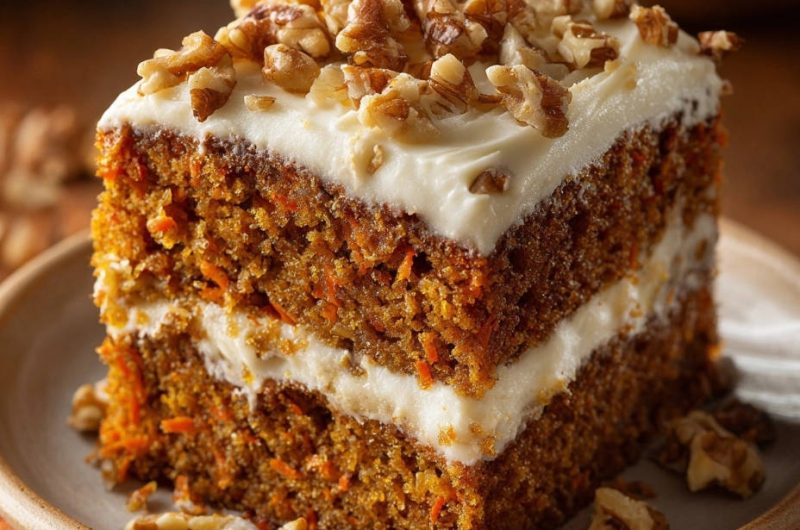
Classic Carrot Cake
Course: DessertCuisine: American CuisineDifficulty: easy12
servings40
minutes35
minutes180
minutesAmerican Cuisine
Ingredients
For the Cake:
2 cups all purpose flour
1 3/4 cups granulated sugar
1/2 cup packed light brown sugar
2 teaspoons baking soda
1 teaspoon ground cinnamon
1/2 teaspoon ground nutmeg
1/2 teaspoon salt
1 1/4 cups vegetable oil
4 large eggs
2 teaspoons vanilla extract
3 cups finely grated carrots (about 4-5 medium carrots)
1 cup chopped walnuts
For the Cream Cheese Frosting:
8 ounces cream cheese, softened
1/2 cup (1 stick) unsalted butter, softened
4 cups powdered sugar, sifted
1 teaspoon vanilla extract
Pinch of salt
1/2 cup chopped walnuts, for topping (optional)
Directions
- Prepare your pans: Preheat your oven to 350°F (175°C). Grease and flour two 9-inch round cake pans, or line with parchment paper.
- Combine dry ingredients: In a large bowl, whisk together the flour, granulated sugar, brown sugar, baking soda, cinnamon, nutmeg, and salt.
- Combine wet ingredients: In a separate medium bowl, whisk together the vegetable oil, eggs, and vanilla extract until well combined.
- Gently mix batter: Pour the wet ingredients into the dry ingredients. Mix with a spatula or spoon just until combined. Be careful not to overmix; overmixing develops gluten which can lead to a tough, dry cake. Fold in the finely grated carrots and 1 cup of chopped walnuts.
- Bake to perfection: Divide the batter evenly between the prepared cake pans. Bake for 30-35 minutes, or until a wooden skewer or toothpick inserted into the center of the cakes comes out clean. This clean toothpick test is your secret weapon against dry cake! Start checking early, as even a few extra minutes can quickly dry out your cake.
- Cool: Let the cakes cool in their pans on a wire rack for 10-15 minutes, then carefully invert them onto the rack to cool completely before frosting.
- Make frosting: While the cakes cool, prepare the cream cheese frosting. In a large bowl, beat the softened cream cheese and butter with an electric mixer until smooth and creamy. Gradually add the sifted powdered sugar, beating until fully incorporated and fluffy. Stir in the vanilla extract and a pinch of salt.
- Assemble: Once the cakes are completely cool, place one cake layer on a serving plate. Spread about one-third of the frosting over the top. Place the second cake layer on top and spread the remaining frosting over the top and sides of the cake. Garnish with additional chopped walnuts, if desired. Serve and enjoy your perfectly moist carrot cake!
Notes
- Ensure cakes are completely cool before frosting to prevent the frosting from melting or sliding off.